Weddings & doljanchiOrdering guide
How much food for a Korean wedding or doljanchi?
These are the questions families asked us while planning their celebrations, answered with the numbers we actually use, including a 200-guest wedding menu we planned this fall.
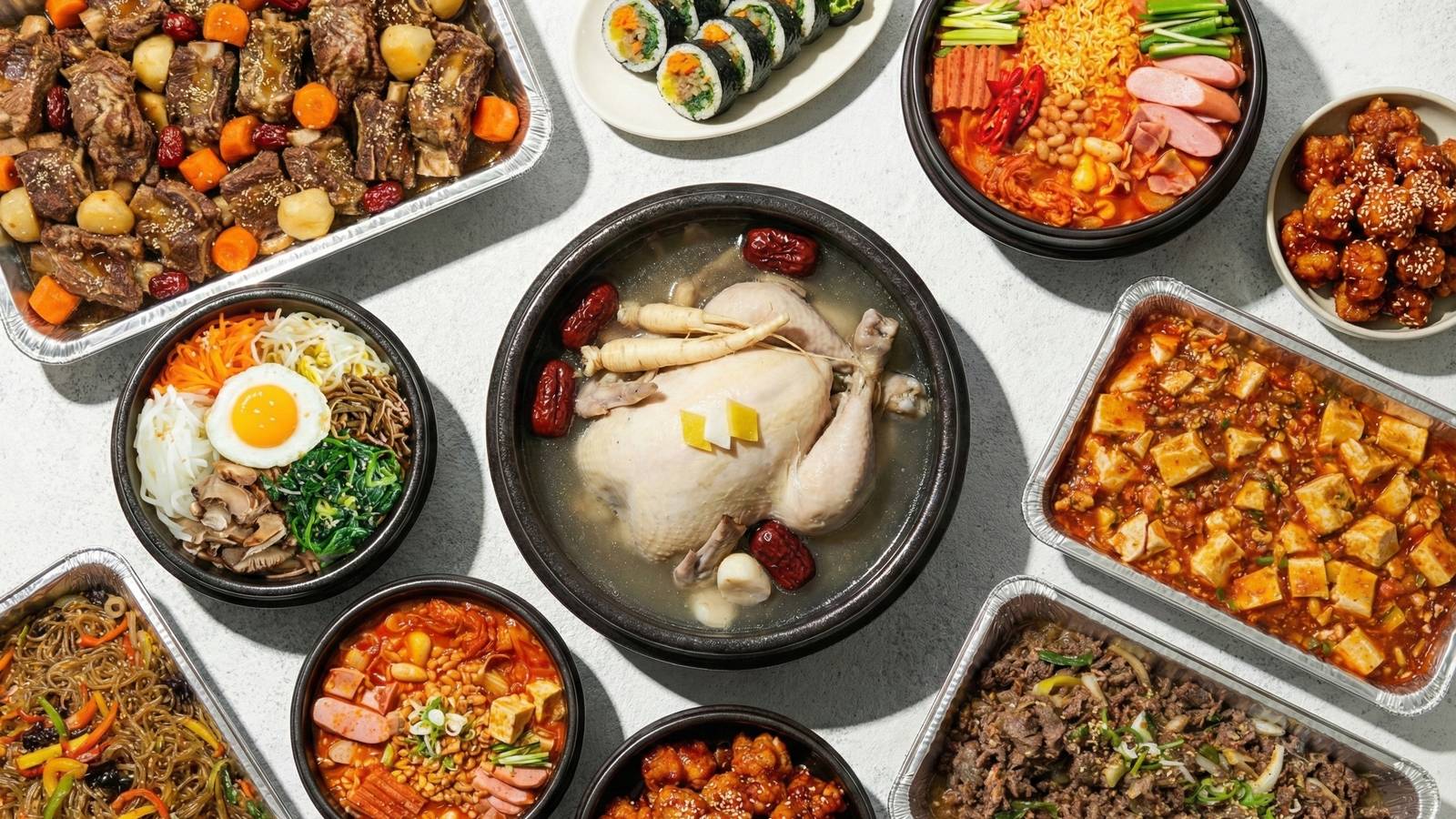
What families ask usHow do we order for a celebration, and how many trays do we need?
Start with three things
- Guest count, with the number of kids. A young child eats about half to two-thirds of an adult portion, so we count kids separately.
- What time you will eat. Food is planned to arrive within about an hour before the meal.
- The dishes you must have. We put those in first and build the rest of the table around them.
How we pick the menu, step by step
- Your must-have dishes go in first, with more trays if they are the dish everyone comes for.
- Choose how many kinds of dishes: a 12, 16 or 20-dish set (below).
- Fill each category in this order: mains, then rice and japchae, then jeon, fried bites and kimbap, then banchan and cold dishes, then dessert.
- Balance the table: one or two beef dishes, a chicken dish, a vegan dish, and no more than one or two spicy dishes.
- We work out the number of trays from your guest count (table below), then adjust for kids, elders and leftovers.
- If you like, taste a few dishes first with a tasting sample, then we send the final menu.
How many kinds of dishes?
For a Korean celebration buffet we usually plan about 15 to 20 dishes with 4 to 6 mains for 150 guests or more. Smaller groups need fewer kinds: when there are too many dishes for the guest count, each tray goes out too small or a lot is left over.
Under about 40 guests, our regular packages for 12 to 48 people are often simpler.
Tell us the set you like and we send a quote for your guests.
How many trays for 50, 100, 150 and 200 guests?
One tray serves about 10. At a buffet with many dishes, guests take a little of each, so we plan by category: about 1.5 servings of mains per guest in total, about 0.8 of rice, plenty of banchan, and smaller amounts of the rest.
| Guests | 50 | 100 | 150 | 200 |
|---|---|---|---|---|
| Mains (4 to 6 kinds together) | 8 | 15 | 23 | 30 |
| Rice (white, purple and fried rice mixed) | 4 | 8 | 12 | 16 |
| Japchae | 2 | 4 | 6 | 8 |
| Banchan, jeon and cold dishes (5 to 7 kinds together) | 9 | 17 | 26 | 34 |
| Kimbap platters (5 rolls each) | 2 | 4 | 6 | 8 |
| Mandu, gimmari, tteokbokki, fried shrimp (together) | 3 | 5 | 8 | 10 |
| Hangwa & yakgwa | 1 | 2 | 3 | 4 |
| Total trays | about 29 | about 55 | about 84 | about 110 |
Trays of about 10 servings. Kids counted as about 0.6 of an adult. "Generous" adds about 15%.
Mains are split across the dishes: the dish your guests love most gets the most trays. A vegan main is planned for the vegan guests plus extra, since others take some too.
This is the starting point. Your quote lists the exact trays for your menu.
Lots of kids or grandparents?
- Kids: kimbap, gangjeong (sweet chili chicken), fried rice, mandu and fried shrimp, with spicy dishes kept apart.
- Elders: soft braised dishes like galbi-jjim and jjimdak, namul, jeon and milder flavors. We add a little more banchan.
- Guests new to Korean food: bulgogi, galbi, japchae, mandu and kimbap go first on the table.
- Vegan guests: mapo tofu, japchae, vegan mandu, namul and vegan kimbap, each labeled.
Generous, or just enough?
Many families want food left to send home with guests, so the last guests in line still see full trays. If you choose "generous", we plan about 15% more. If you choose "just enough", we plan close to the table above with a little less.
If you plan to pack leftovers for guests, tell us when you ask for a quote.
Timing and keeping food warm
- We plan to arrive within about an hour before the meal and confirm the time with you or your venue ahead of time.
- Braised dishes like galbi-jjim and jjimdak hold their heat well. Fried bites and tteokbokki firm up as they cool, so they are best on warmers or in smaller amounts.
- Cold dishes like jellyfish salad, spicy squid salad, kimchi and namul are served cool. We check with you or your venue about warmers before the day.
- We are usually closed on Sundays. For a Sunday celebration, ask us and we will tell you honestly if our kitchen can do it.
A real case: a 200-guest wedding
A couple asked us this fall for a wedding dinner for 200 guests. They wanted galbi-jjim, plenty of banchan and one more dish that is not on our regular menu. We built the menu around those requests: 22 dishes with 5 mains, about 1.5 servings of mains per guest.
- Mains
- Galbi-jjim 12 trays, bulgogi 8, jjimdak 6, vegan mapo tofu 4, plus the one requested dish
- Banchan & cold dishes
- Namul (3 kinds) 9, kimchi 6, cucumber kimchi 5, assorted jeon 10, jellyfish salad 6, spicy squid salad 4
- Rice & noodles
- Japchae 10, white rice 4, purple rice 4, kimchi fried rice 4, shrimp fried rice 4
- Bites
- Mandu 4, gimmari 4, tteokbokki 4, kimbap 10 platters
- Dessert
- Hangwa & yakgwa 5 trays
- Their requests came first: galbi-jjim got the most trays, and anything not on our menu (the requested dish, fruit for dessert) was added only after checking with our kitchen.
- If 12 trays of galbi-jjim feels like a lot, half can be LA galbi instead, so the beef is not all one dish.
- Rice was mixed: white and purple rice plus two fried rices, instead of two similar plain rices.
- Instead of 10 trays of mandu, we split them into mandu, gimmari and tteokbokki for more variety.
- Their next question was whether they could taste the food first. That is why we added tasting samples.
Can we taste the food first?
Yes. When you ask for a quote, answer "Would you like a sample box?" and pick up to three dishes. A tasting is paid in advance, and the amount you paid comes off your event order when you book your celebration with us.
We will tell you the tasting price and set the day and time with you.
Ready to plan your menu?
Tell us about your celebration and we send a suggested menu with tray counts within one business day.